Dental Implants San Antonio: What to Expect When Replacing a Missing Tooth
Losing a tooth can change more than the appearance of your smile. You may notice that chewing feels different, nearby teeth begin to shift, or you feel less confident when speaking or smiling. Even when a missing tooth does not cause immediate discomfort, leaving the space unaddressed can affect the way your teeth function together over time.
The good news is that modern restorative dentistry offers several ways to replace missing teeth. For patients looking for a stable, natural-looking solution, dental implants San Antonio patients choose can provide a long-term approach to restoring both the appearance and function of a missing tooth.
At Westlakes Family Dental, we provide personalized dental care based on your oral health, goals, and individual needs. If you are considering an implant after losing a tooth, understanding what happens during the treatment process can make your decision easier and help you feel more prepared for your consultation.
Why Replace a Missing Tooth?
It can be tempting to ignore a missing tooth, particularly if it is located toward the back of your mouth and is not easy to see. However, a missing tooth can affect more than your smile.
A gap may influence how your remaining teeth come together when you bite and chew. Nearby teeth can also shift toward the open space, potentially changing your bite and making certain areas more difficult to clean.
Tooth loss may also affect:
- Chewing and biting
- Speech in some situations
- The alignment of surrounding teeth
- Your confidence when smiling
- The distribution of biting forces
- The condition of the jawbone in the area of tooth loss
Replacing the missing tooth can help restore a more complete smile and support normal oral function.
Your dentist can evaluate the area and explain whether an implant, bridge, denture, or another restorative option is appropriate for you.
What Are Dental Implants?
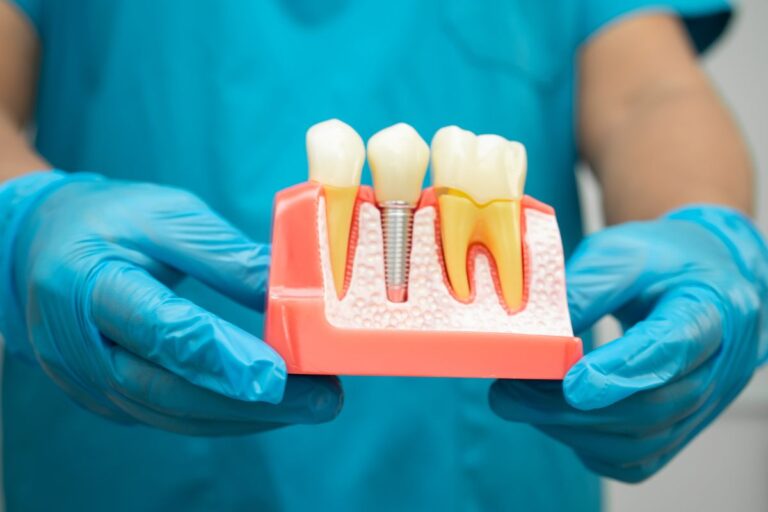
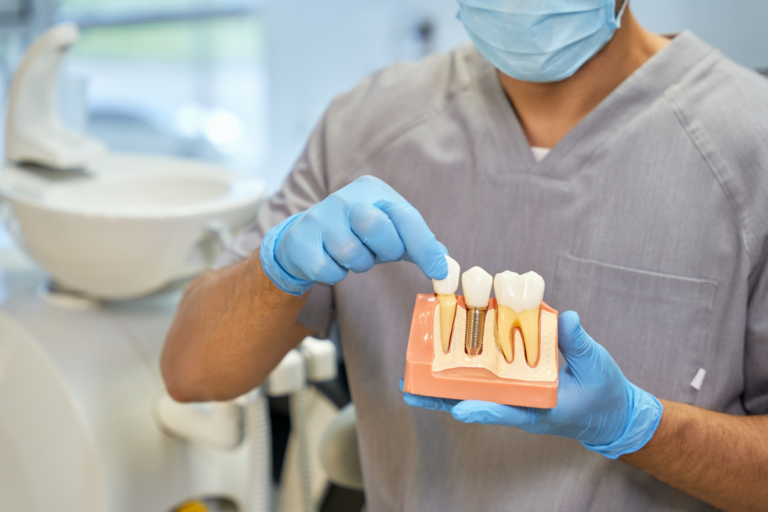
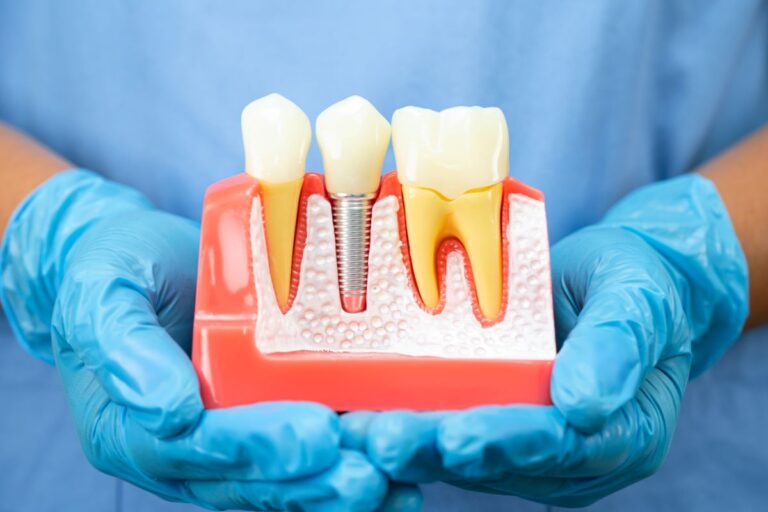
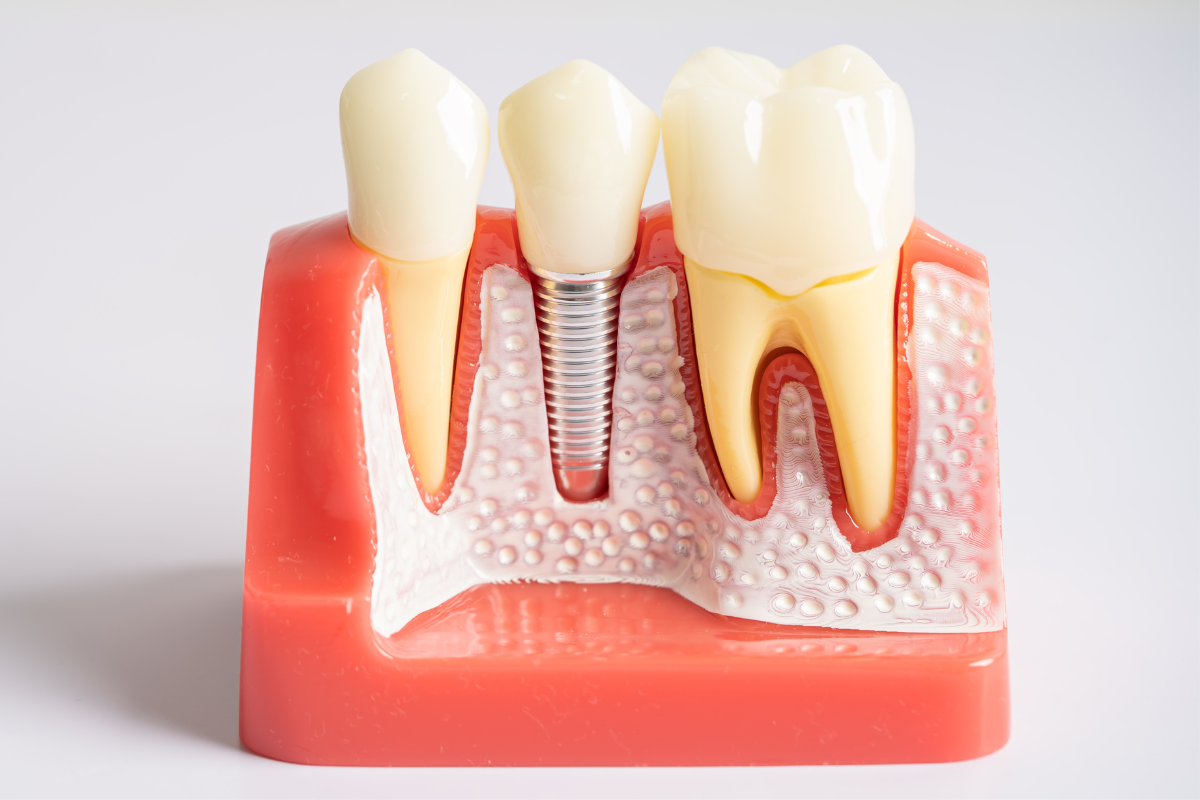
A dental implant is designed to replace the root portion of a missing tooth and provide a stable foundation for a replacement tooth.
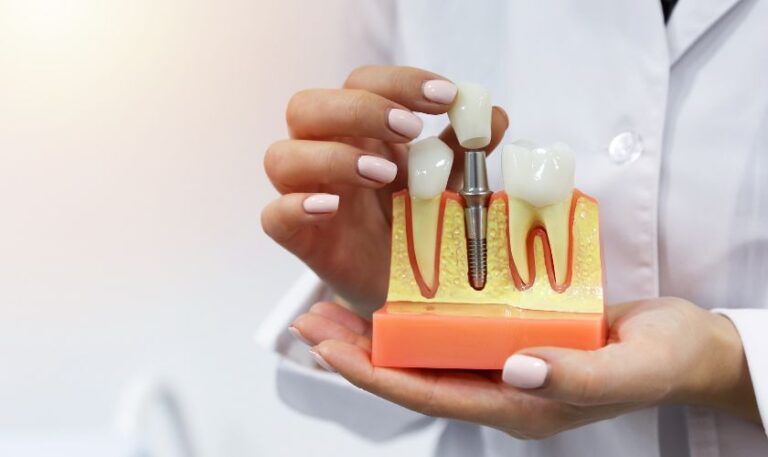
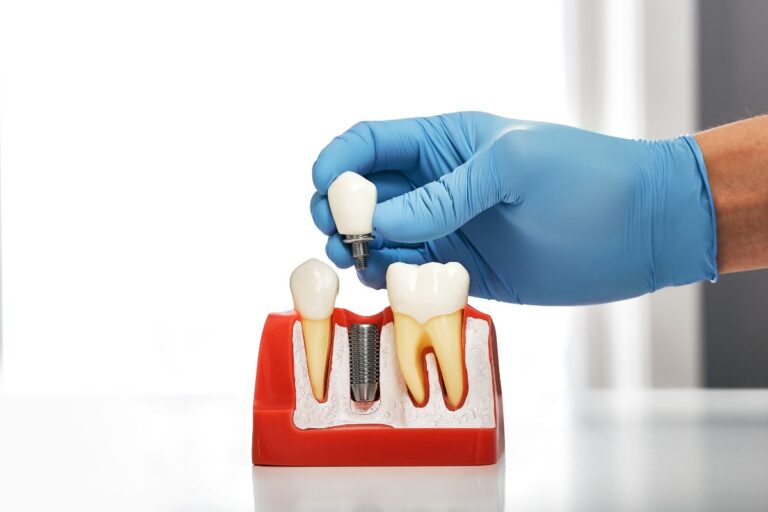
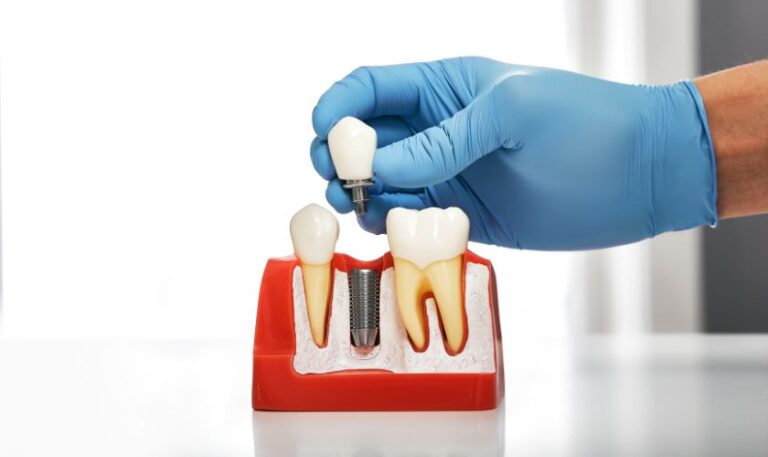
A typical single-tooth implant restoration has three main components:
The Implant
The implant is a small post that is placed into the jawbone. It serves as the foundation for the replacement tooth.
The Abutment
The abutment connects the implant to the visible restoration.
The Crown
The crown is the portion that you see when you smile. It is designed to restore the shape and function of the missing tooth while blending with the surrounding teeth.
Together, these components create a tooth replacement that is designed to function as part of your smile.
Unlike a traditional bridge, a single implant does not need to use neighboring healthy teeth as its primary support.
What to Expect When Replacing a Missing Tooth
If you have never had an implant before, you may wonder what the process actually involves. The treatment timeline varies from patient to patient, but it generally involves several stages.
1. Start With a Dental Implant Consultation
The first step is an evaluation with a qualified dentist or oral care provider.
During your consultation, we will want to understand why the tooth was lost, how long it has been missing, and what you hope to accomplish with treatment.
Your dental team may evaluate:
- The health of your gums
- The condition of your remaining teeth
- Your bite
- The available jawbone
- The location of the missing tooth
- Your overall oral health
- Your treatment goals
Imaging may also be used when needed to help evaluate the bone and surrounding structures.
This appointment is not simply about deciding whether you want an implant. It allows your dentist to determine whether an implant is appropriate and what preparation may be necessary.
2. Determine Whether Your Mouth Is Ready for an Implant
Healthy supporting tissues are an important part of successful implant treatment.
If you have untreated gum disease, significant decay, an infection, or another dental concern, your dentist may recommend addressing that issue before proceeding.
The amount and condition of the jawbone can also be important. After a tooth is lost, the bone surrounding the former tooth root can gradually change. If there is not enough bone to adequately support an implant, additional treatment may sometimes be considered.
This does not necessarily mean that implants are no longer an option.
Instead, it means your treatment plan may need to include additional steps before implant placement.
3. Develop a Personalized Treatment Plan
No two missing-tooth cases are exactly alike.
A patient who recently lost one front tooth may have very different needs from someone who has been missing a molar for several years.
Your dentist will consider the location of the missing tooth, your oral health, your available bone, the condition of neighboring teeth, and your desired result.
Your treatment plan may explain:
- Whether an implant is recommended
- Whether additional treatment is needed first
- What type of restoration may be used
- The anticipated stages of treatment
- How healing will be monitored
- What you can expect after treatment
Having a clear plan allows you to make an informed decision instead of choosing a tooth-replacement option based solely on appearance.
What Happens During Implant Placement?
Once your mouth is ready and your treatment plan has been established, the implant can be placed into the jawbone when appropriate.
The implant placement procedure is performed using appropriate dental techniques and anesthesia to help keep you comfortable.
After placement, the implant needs time to heal and integrate with the surrounding bone. This process is commonly called osseointegration.
Healing time varies depending on the individual and the treatment involved. Your dentist will provide instructions for caring for the area and explain when you should return for follow-up appointments.
It is important not to compare your recovery timeline with someone else’s. Your oral health, the location of the implant, bone condition, and other factors can influence the treatment process.
When Is the Replacement Tooth Added?
The final crown is generally placed after the implant has healed appropriately and the dental team determines that the site is ready for restoration.
The crown is designed to fit comfortably with your surrounding teeth and function with your bite.
For a single missing tooth, the goal is not simply to close the visible gap. The restoration should also support comfortable chewing and fit naturally within your existing smile.
Your dentist will assess the restoration and make adjustments when necessary to help ensure proper fit and function.
What If Your Tooth Has Been Missing for Years?
You may wonder whether it is too late to consider an implant if you lost your tooth several years ago.
The answer depends on your individual oral health.
Long-term tooth loss can be associated with changes in the jawbone. Because implants require appropriate support, your dentist will need to evaluate the area before determining whether implant placement is suitable.
If additional bone support is needed, your dental team can explain whether preparatory treatment may be an option.
The important point is that you should not assume you are automatically disqualified from implant treatment simply because you have lived with a missing tooth for a long time.
A professional evaluation can provide a much clearer answer.
Dental Implant vs. Dental Bridge: Which Is Better?
Dental implants and bridges can both be used to replace a missing tooth, but they work differently.
A traditional dental bridge typically uses neighboring teeth to support the replacement tooth. An implant, on the other hand, is anchored in the jaw and can support an individual crown.
An implant may be worth discussing if you want to replace a single tooth without relying on adjacent teeth for support.
However, an implant is not automatically the right solution for every patient.
A dental bridge may make sense depending on your oral health, the condition of neighboring teeth, your treatment preferences, and other factors.
During a consultation, our dental team can explain the differences and help you understand which options may be appropriate for your smile.
How Do You Care for a Dental Implant?
Once your implant restoration is complete, it still needs regular care.
Although the replacement tooth itself cannot develop a cavity in the same way as a natural tooth, the tissues around the implant still need attention.
Good implant care includes:
- Brushing regularly with proper technique
- Cleaning between your teeth as recommended
- Maintaining healthy gums
- Attending routine dental appointments
- Following professional cleaning recommendations
- Letting your dentist know about changes such as discomfort, swelling, or bleeding
Your implant should be treated as part of your overall oral health rather than as a restoration that can simply be forgotten after placement.
Regular visits allow your dentist to monitor the implant, surrounding tissues, and the rest of your smile.
Why Choose a Local Dental Practice for Implant Care?
Choosing where to receive dental implant treatment involves more than looking for a practice that offers implants.
You want a dental clinic where your questions are taken seriously and your treatment plan is clearly explained.
At Westlakes Family Dental, we provide comprehensive dental care in San Antonio and take a personalized approach to treatment. Our services include restorative options such as dental crowns and dental implants, allowing our team to consider your broader oral health when discussing tooth replacement.
We understand that every patient comes to the dental office with different concerns. Some people are primarily interested in restoring chewing function. Others want to improve the appearance of a visible gap or find a stable alternative to a removable restoration.
Our goal is to help you understand your options and make a decision that fits your dental needs.
When Should You Schedule an Implant Consultation?
You do not need to wait until a missing tooth begins causing noticeable problems before talking with a dentist.
Consider scheduling an evaluation if:
- You recently lost a tooth
- You have an older missing tooth that you want to replace
- Your existing bridge is no longer meeting your needs
- You are having difficulty chewing because of tooth loss
- You are concerned about a changing bite
- You want to learn whether an implant is appropriate for you
- You are comparing implants with bridges or dentures
An evaluation can help you understand what is happening in the area and what treatment options are available.
The sooner you understand your choices, the easier it can be to plan the next step.
Frequently Asked Questions About Dental Implants in San Antonio
1. Can one dental implant replace one missing tooth?
Yes. A single dental implant can be used to support a replacement crown for an individual missing tooth when the patient is an appropriate candidate. Your dentist will evaluate your gums, jawbone, surrounding teeth, and overall oral health before recommending treatment.
2. What happens during a dental implant consultation?
Your dentist will evaluate the missing-tooth area, surrounding teeth, gums, bite, and available bone. Imaging may be recommended depending on your situation. We will also discuss your goals and explain the treatment options that may be appropriate for you.
3. Can I get a dental implant if I have had a missing tooth for several years?
Possibly. The length of time a tooth has been missing does not automatically rule out implant treatment. However, changes in the jawbone can occur after tooth loss. An examination is necessary to determine whether there is adequate support or whether additional treatment may be needed.
4. How long does the dental implant process take?
The timeline varies depending on the patient’s oral health, healing, implant location, and whether additional procedures are required. Implant treatment usually involves planning, implant placement, a healing period, and placement of the final restoration. Your dentist can provide a more personalized timeline after evaluating your smile.
5. How do I know if dental implants are right for me?
The best way to find out is through an individual evaluation with a dentist. We can assess your oral health, jawbone, gums, bite, and treatment goals and then explain whether an implant or another tooth-replacement option may be suitable.
Restore Your Smile With Dental Implant Care in San Antonio
A missing tooth can affect your smile, chewing ability, and confidence, but you do not have to navigate tooth replacement decisions alone.
Dental Implants San Antonio can provide a stable foundation for replacing a missing tooth in appropriately selected patients. From the initial evaluation and treatment planning to implant placement, healing, restoration, and ongoing maintenance, understanding each stage can make the process feel much more manageable.
At Westlakes Family Dental, we provide personalized dental care for patients in San Antonio, Texas. If you are considering replacing a missing tooth, our team can evaluate your smile, discuss your options, and help you determine the next appropriate step.
Ready to explore your tooth-replacement options? Book Now with Westlakes Family Dental and schedule your dental implant consultation in San Antonio.