Braces vs. Invisalign: Which Smile-Straightening Option Is Right for San Antonio Patients?
Want a straighter smile but unsure whether traditional braces or Invisalign is the better choice? You are not alone. Many teens and adults considering orthodontic treatment have questions about appearance, comfort, daily routines, treatment goals, and which option can address their specific alignment concerns.
The good news is that modern orthodontic care offers more choices than ever. Traditional braces remain a dependable option for correcting many alignment and bite concerns, while Invisalign provides a discreet, removable alternative for appropriate cases. At Westlakes Family Dental, we provide both traditional braces and Invisalign treatment in San Antonio, allowing patients to explore an option that fits their dental needs and lifestyle.
If you are researching braces in San Antonio, understanding the differences between braces and Invisalign can help you have a more productive conversation with your dentist and make a confident decision about your smile.
Braces vs. Invisalign: What Is the Difference?
Both traditional braces and Invisalign are designed to gradually move teeth into improved positions. However, they use different approaches.
Traditional Braces
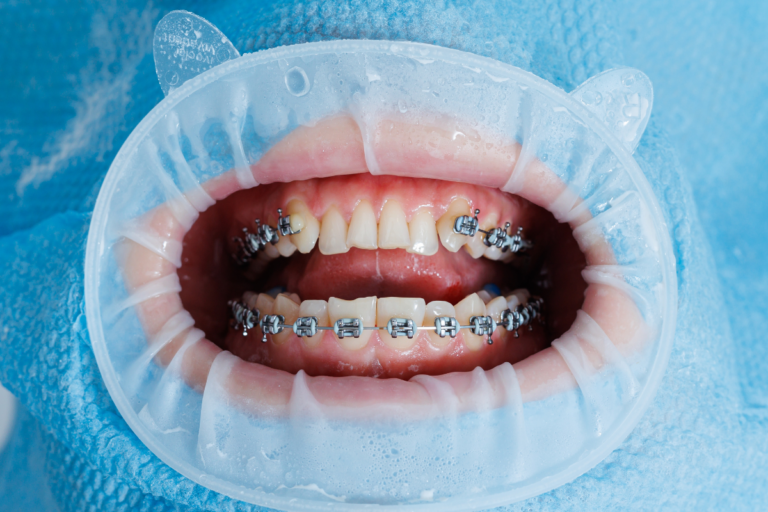
Traditional braces use brackets attached to the teeth and wires that apply controlled pressure to gradually guide teeth into alignment.
They are fixed in place throughout treatment, meaning you do not need to remember to put them back in after eating or cleaning your teeth.
Braces may be considered for:
- Crowded teeth
- Gaps between teeth
- Certain bite problems
- Misaligned teeth
- More complex orthodontic corrections
Invisalign
Invisalign uses a series of custom-made, clear aligners that fit over the teeth and gradually move them. The aligners are removable, making it easier to eat, brush, and floss without orthodontic appliances in the way.
Westlakes Family Dental offers Invisalign as a clear alternative to traditional braces and uses the treatment to address concerns such as misaligned teeth, overbites, and underbites when appropriate.
Neither option is automatically better for every patient. The right treatment depends on your teeth, bite, oral health, treatment goals, and ability to follow the treatment plan.
When Might Traditional Braces Be the Better Choice?
Traditional braces have remained a trusted orthodontic treatment for decades because they provide continuous, controlled tooth movement.
For some patients, braces may be particularly useful when more extensive tooth movement or bite correction is required.
Braces Can Be Helpful for Complex Alignment Concerns
Braces can address a wide range of orthodontic problems, including certain cases involving:
- Significant crowding
- Larger spaces between teeth
- Tooth rotations
- Bite discrepancies
- Complex tooth movements
Research comparing braces and clear aligners indicates that traditional braces can offer greater control for some types of tooth movement, although treatment suitability varies by individual case.
Braces Do Not Depend on Daily Removal
One advantage of traditional braces is that they stay attached to your teeth.
With Invisalign, patients need to consistently wear their aligners as directed. With braces, the appliance remains in place throughout treatment.
This can make braces an appealing option for patients who may have difficulty maintaining a strict aligner-wearing routine.
When Might Invisalign Be the Better Choice?
For patients who prioritize discretion and flexibility, Invisalign can be an attractive option.
Invisalign Is Designed to Be Less Noticeable
One of the biggest differences is appearance.
Traditional braces use visible brackets and wires, while Invisalign aligners are made from clear material and are designed to be much less noticeable.
This can be especially appealing to:
- Working professionals
- College students
- Teens
- Adults
- Patients who are self-conscious about wearing braces
Invisalign Aligners Are Removable
Another major advantage is flexibility.
Patients can generally remove their aligners when eating and for routine oral hygiene, following their provider’s instructions.
This means you can continue enjoying many of your favorite foods without having to work around brackets and wires.
Oral Hygiene Can Be More Convenient
Brushing and flossing around traditional braces requires additional care because brackets and wires can create areas where food and plaque collect.
With removable aligners, you can take them out before brushing and flossing.
However, Invisalign still requires commitment. Patients need to wear their aligners as instructed and keep both their teeth and aligners clean.
Braces vs. Invisalign: A Quick Comparison
| Feature | Traditional Braces | Invisalign |
| Appearance | Visible brackets and wires | Clear, discreet aligners |
| Removable | No | Yes |
| Eating | Some food restrictions may apply | Aligners are removed for eating |
| Oral hygiene | Requires careful cleaning around brackets | Aligners are removed for brushing and flossing |
| Daily compliance | Appliance remains in place | Requires consistent wear |
| Complex cases | Often suitable for extensive corrections | Suitable for many, but not all, cases |
| Lifestyle flexibility | More adjustment required | Generally more flexible |
| Best choice | Depends on individual needs | Depends on individual needs |
The table provides a general comparison, not a recommendation. Your dentist should evaluate your specific orthodontic concerns before determining which treatment is appropriate.
What About Comfort?
Comfort is another common concern when patients compare braces and Invisalign.
Braces
You may experience some pressure or mild soreness after braces are initially placed or adjusted. Your mouth may also need time to become accustomed to brackets and wires.
Invisalign
New aligners can also create pressure as they guide teeth into their planned positions. Mild discomfort is possible, particularly when switching to a new set.
The important point is that both treatments intentionally apply pressure to move teeth. Feeling some pressure does not necessarily mean something is wrong.
Your dental team can explain what sensations are normal and when you should contact the office.
Which Option Is Better for Teenagers?
Both braces and Invisalign can be considered for teenagers, but the best option depends on the individual.
Traditional braces may be easier for some teens because they remain attached to the teeth. Invisalign may appeal to teens who prefer a more discreet treatment and are responsible about wearing and caring for their aligners.
When considering Invisalign for a teen, it is important to think about:
- Responsibility with removable aligners
- Ability to follow wear instructions
- Sports and extracurricular activities
- Oral hygiene habits
- Treatment complexity
- Personal preferences
A consultation can help determine which approach fits the teenager’s needs and routine.
What About Adults Considering Orthodontic Treatment?
Adults do not have to give up on the idea of a straighter smile simply because they did not have orthodontic treatment as a teenager.
Adult patients may choose orthodontic treatment because:
- Their teeth shifted after previous braces
- They have always been unhappy with their alignment
- Crowding has developed over time
- They want to improve their smile
- They want to address certain bite concerns
- They are preparing for a major personal or professional event
Invisalign can be especially appealing to adults who want a discreet treatment option. However, traditional braces remain an effective choice when they better match the patient’s orthodontic needs.
How Much Does Your Lifestyle Matter?
Your daily routine should be part of the conversation when selecting orthodontic treatment.
Braces May Fit You If:
- You prefer a fixed treatment option
- You do not want to manage removable aligners
- You have more complex orthodontic needs
- You are comfortable adjusting your diet during treatment
- You want your orthodontic appliance to remain in place
Invisalign May Fit You If:
- You prefer a discreet appearance
- You want removable orthodontic appliances
- You value flexibility when eating
- You are comfortable following daily wear instructions
- You want to brush and floss without brackets and wires
Your lifestyle does not determine treatment eligibility by itself, but it can influence which option is easier for you to manage.
What Orthodontic Problems Can Braces and Invisalign Address?
Orthodontic treatment can address a variety of alignment concerns. Depending on the severity and complexity of your case, your dentist may evaluate concerns such as:
Crowding
Crowding occurs when there is not enough room for teeth to fit properly within the dental arch.
Spacing and Gaps
Orthodontic treatment can help bring appropriately selected teeth closer together when excessive spacing is present.
Overbite
An overbite occurs when the upper front teeth extend too far over the lower teeth.
Underbite
An underbite occurs when the lower teeth extend beyond the upper front teeth.
Misaligned Teeth
Teeth that sit at unusual angles or positions may sometimes be corrected through orthodontic treatment.
The appropriate treatment depends on the specific cause and severity of the problem.
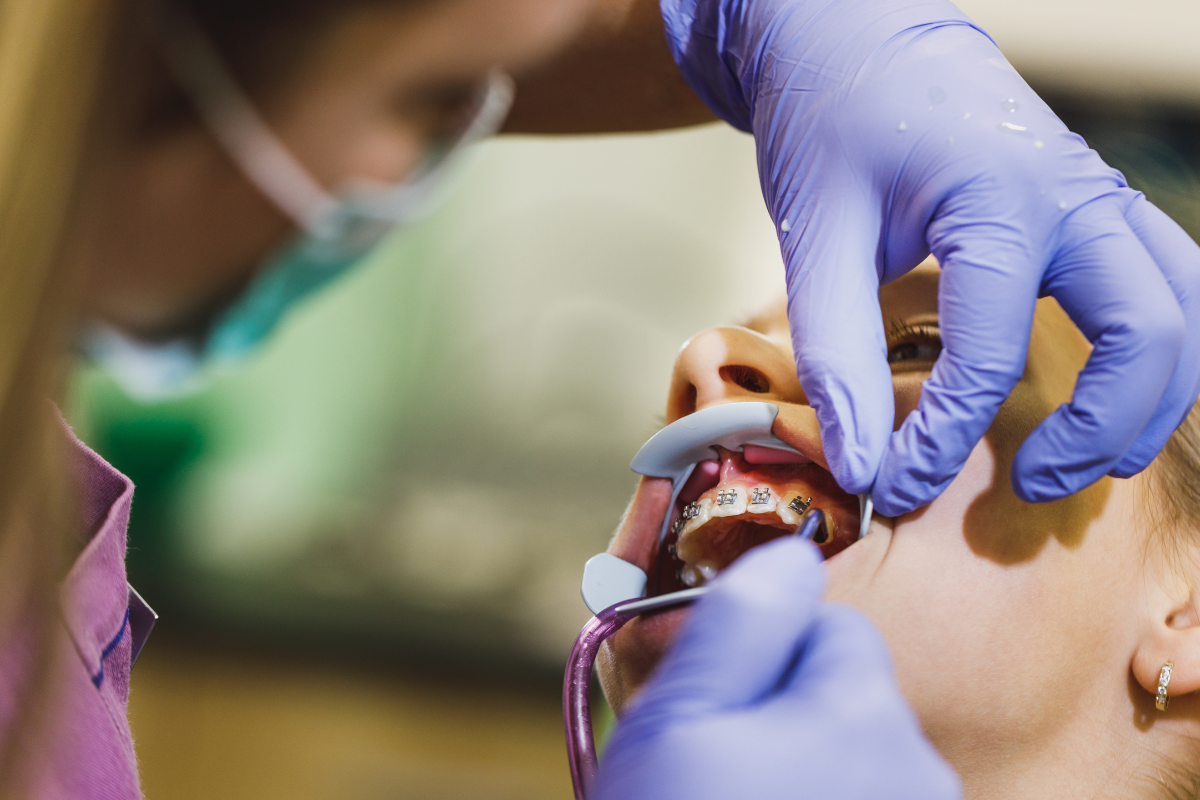
What Happens During an Orthodontic Consultation?
Choosing between braces and Invisalign should start with an evaluation rather than simply selecting the treatment that looks more appealing.
During a consultation, your dental team may assess:
- Tooth alignment
- Bite relationship
- Gum health
- Existing dental work
- Jaw and facial structure
- Overall oral health
- Your smile goals
- Your preferred treatment style
Your dentist can then explain whether braces, Invisalign, or another approach may be appropriate.
At Westlakes Family Dental, we provide personalized orthodontic care and help patients understand their treatment options before beginning care. Our practice offers both braces and Invisalign treatment in San Antonio.
Why Choose Westlakes Family Dental?
Choosing an orthodontic treatment is important, but choosing the dental team providing that treatment matters too.
At Westlakes Family Dental, we provide comprehensive dental care for patients and families in San Antonio. Our services include traditional braces, Invisalign, preventive dentistry, restorative treatment, cosmetic dentistry, dental implants, crowns, and other dental services.
Our approach focuses on helping patients understand their options rather than taking a one-size-fits-all approach.
When you visit our local dental practice, we can help you:
- Discuss your smile concerns
- Evaluate your alignment and bite
- Understand braces and Invisalign
- Review appropriate treatment options
- Answer questions about your care
- Develop a treatment plan based on your needs
Our San Antonio office is located at 9522 Potranco Road, San Antonio, TX 78251.
Which Treatment Should You Choose?
There is no single answer for everyone.
Choose braces because they are braces is not enough of a reason to begin treatment. Likewise, choosing Invisalign simply because the aligners are clear does not necessarily mean they are the best solution for your case.
Instead, consider three things:
Your Dental Needs
What needs to be corrected? Mild crowding may have different treatment considerations than a more complex bite problem.
Your Lifestyle
Will you reliably wear and care for removable aligners? Or would a fixed appliance be easier for you?
Your Goals
Are appearance, convenience, treatment control, or flexibility especially important to you?
Once these factors are evaluated, your dentist can help you make a more informed decision.
Frequently Asked Questions About Braces and Invisalign
1. Are braces or Invisalign better?
Neither is universally better. Braces may be appropriate for some complex orthodontic cases, while Invisalign can be an excellent option for many patients who want a discreet, removable treatment. A dental evaluation is necessary to determine which option fits your needs.
2. Can Invisalign replace traditional braces?
In some cases, yes. Invisalign can address many alignment concerns, but it is not appropriate for every orthodontic situation. Your dentist can determine whether clear aligners can achieve the desired result for your smile.
3. Are braces only for teenagers?
No. Adults can also benefit from orthodontic treatment. Healthy adults may be candidates for either traditional braces or Invisalign depending on their dental condition and treatment goals.
4. Can I eat normally with Invisalign?
Invisalign aligners are removable, so patients generally remove them while eating and drinking according to their provider’s instructions. After eating, teeth should be cleaned before the aligners are placed back in.
5. How do I know whether I need braces or Invisalign?
The best way to find out is to schedule an orthodontic consultation. Your dentist can evaluate your teeth, bite, oral health, and treatment goals before recommending an appropriate option.
Ready to Explore Braces or Invisalign in San Antonio?
A straighter smile can be a worthwhile investment in your confidence and oral health, but the best treatment should be based on your individual needs, not simply on what is most popular.
Whether you are interested in the reliability of traditional braces or the discreet flexibility of Invisalign, Westlakes Family Dental can help you understand your options.
We provide Invisalign and braces in San Antonio treatment in San Antonio, along with comprehensive dental services to support your smile before, during, and after orthodontic treatment.
If you are ready to find out which smile-straightening option may be right for you, contact Westlakes Family Dental today to schedule a consultation. Our team is ready to help you take the next step toward a healthier, straighter, more confident smile.