Dental Crowns vs. Implants – Which Is Best for Your Smile?
Are you looking to enhance your smile and restore the natural beauty of your teeth? Dental crowns and implants are two popular options to help you achieve that. Whether you have a damaged tooth or missing teeth, these dental solutions offer promising results. But which one is best for your smile? In this blog post, we will explore the differences between dental crowns and implants, weigh their pros and cons, and guide you in making an informed decision. So, let’s dive in and discover the perfect solution to revitalize your smile!
What Are Dental Crowns?
Dental crowns are a restorative dental treatment designed to repair and protect damaged teeth. They are custom-made tooth-shaped caps that cover the entire visible portion of your tooth, restoring its shape, size, strength, and appearance. These crowns can be made from various materials such as porcelain, ceramic, metal alloys, or a combination.
Getting a dental crown typically involves two visits to your dentist. During the first visit, your tooth is prepared by removing decay and reshaping it to accommodate the crown. Impressions will then be taken to ensure an accurate fit for your customized crown. While you wait for your permanent crown to be created in a dental lab, a temporary crown will be placed over your tooth.
Once ready, the temporary crown is removed during the second visit and replaced with the permanent one using dental cement or adhesive. The result? A beautifully restored tooth that blends seamlessly with your natural teeth.
Dental crowns offer several benefits beyond aesthetics. They strengthen and protect weakened or cracked teeth while improving their functionality. Crowns also help prevent further damage by covering vulnerable areas and supporting adjacent teeth.
Regular brushing and flossing are essential to maintain optimal oral health with a dental crown. Additionally, routine visits to the dentist should be addressed so they can monitor the condition of your natural tooth underneath the crown and its surrounding gums.
In summary,
- Dental crowns are custom-made caps that restore damaged teeth.
- They come in various materials, including porcelain and metal alloys.
- The process takes two visits: preparation, followed by placement.
- Crowns enhance aesthetics while providing strength and protection.
- Proper oral hygiene care helps maintain longevity for dental crowns.
What Are Dental Implants?
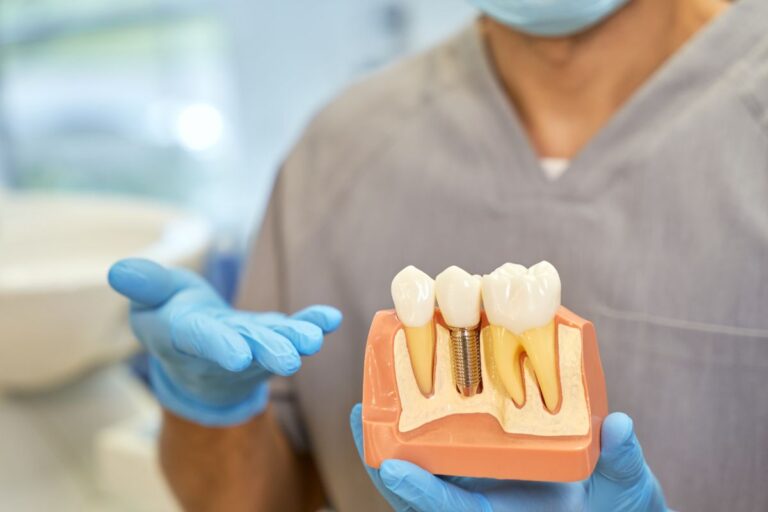
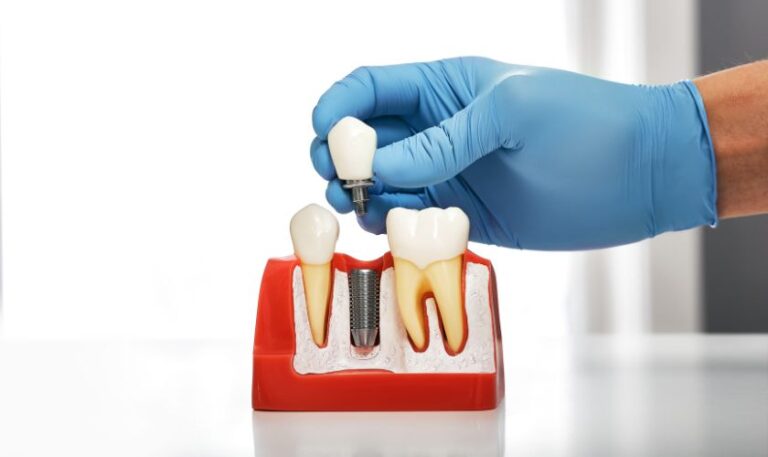
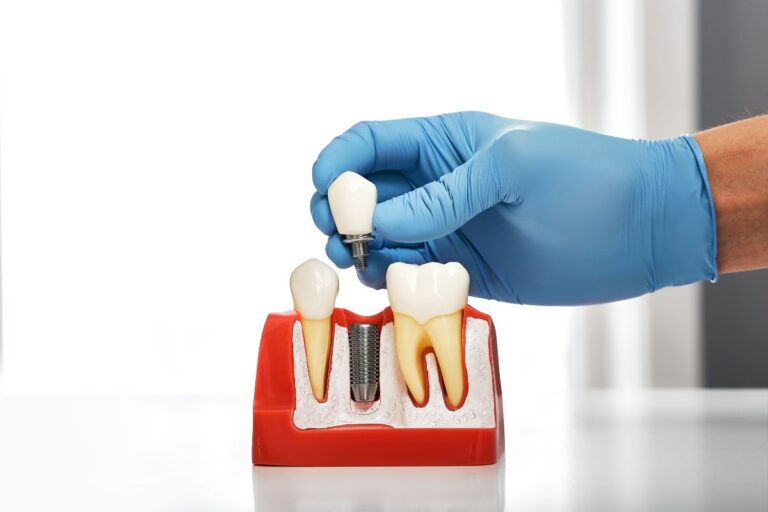
Dental implants are a popular and effective solution for replacing missing teeth. Unlike dental crowns, which cover existing teeth, implants replace the entire tooth from root to crown.
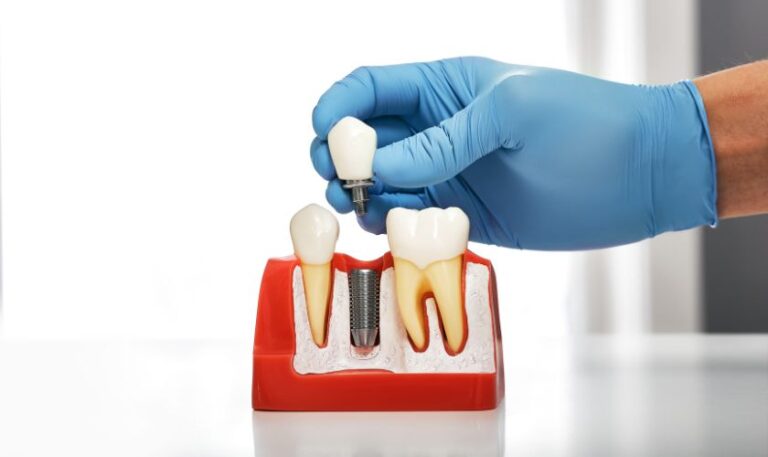
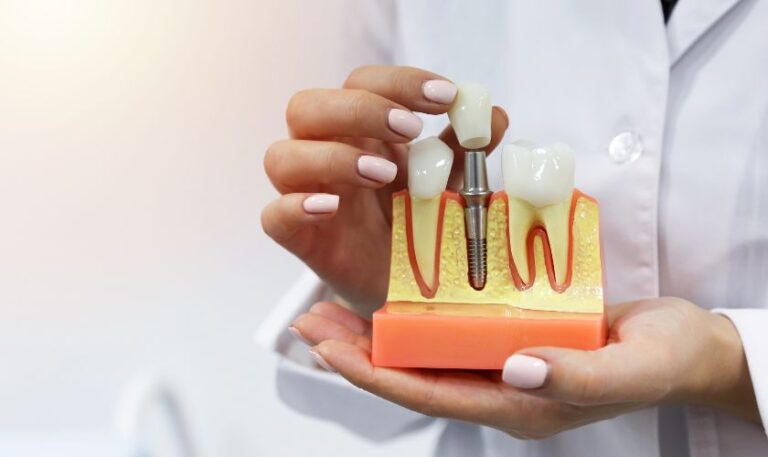
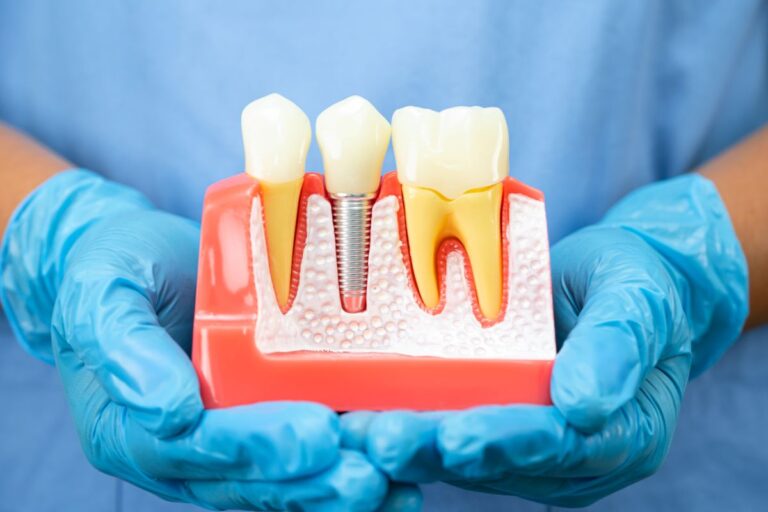
The implant is a small titanium post surgically placed into the jawbone. Over time, the bone fuses with the implant through osseointegration, creating a strong and stable foundation for the replacement tooth.
An abutment is attached once the implant has fully healed and integrated with the bone. This serves as a connector between the implant and the final restoration – usually a dental crown. The crown is custom-made to match your natural teeth in size, shape, and color, resulting in a seamless smile.
One of the biggest advantages of dental implants is their durability. With proper care and maintenance, they can last a lifetime. They also provide excellent functionality since they are anchored securely like natural teeth.
However, it’s important to note that not everyone may be suitable candidates for dental implants. Adequate bone density and overall oral health are crucial factors that need to be evaluated before undergoing this procedure.
In terms of cost, dental implants tend to be more expensive than dental crowns initially. However, considering their long-term benefits and longevity compared to other therapeutic options such as bridges or dentures makes them worth considering.
While dental crowns and implants have their own merits depending on individual circumstances, if you’re looking for a permanent solution that closely mimics natural teeth in appearance and function, dental implants might be your best option!
The Pros and Cons of Each
Dental Crowns
- Pros: Dental crowns are a versatile solution for various dental problems. They can restore a damaged tooth’s appearance, shape, and function. Crowns strengthen and protect weakened teeth, preventing further damage or decay. They can be color-matched to blend seamlessly with natural teeth, giving you an aesthetically pleasing smile.
- Cons: One drawback of dental crowns is that they require the removal of a significant amount of healthy tooth structure to make room for the crown. Additionally, crowns may be prone to chipping or breaking over time, depending on the material used. In some cases, sensitivity or discomfort may occur after getting a crown.
Dental Implants
- Pros: Dental implants are considered the gold standard for replacing missing teeth as they mimic the look and function of natural teeth. They provide excellent stability and support for artificial teeth without relying on neighboring teeth. Implants also stimulate jawbone growth, preventing bone loss in the long term.
- Cons: The implant placement process involves surgery and requires sufficient bone density to succeed. This means that only some people are eligible for dental implants right away. The procedure may also have a longer recovery period than other treatment options.
It’s important to consult your dentist to determine which option suits your specific dental needs and goals.
Which Is Best For Your Smile?
When determining which option is best for your smile – dental crowns or implants – there are several factors to consider. Both options have advantages and disadvantages, so it’s important to understand what each can offer.
Dental crowns typically restore damaged teeth, providing strength and protection. They fit over the existing tooth structure like a cap, improving appearance and functionality. Crowns can be made from porcelain, metal alloys, or a combination.
On the other hand, dental implants are considered a more permanent solution for replacing missing teeth. Implants involve surgically placing an artificial tooth root into the jawbone, onto which a prosthetic tooth is attached. This restores function and helps maintain bone density in the jaw.
The decision between crowns and implants depends on your circumstances. If you have a severely damaged tooth with enough healthy structure, a crown may be sufficient to restore its appearance and function. However, dental implants might be the better choice if you have one or more missing teeth that need replacement or if the damage is extensive beyond repair.
Consider consulting with your dentist, who will evaluate your needs and provide personalized recommendations based on factors such as oral health condition, budget considerations, and long-term goals.
It’s worth noting that both dental crowns and implants require proper care to ensure their longevity. Regular brushing twice daily and flossing are essential for maintaining good oral hygiene, regardless of your choice. Regular check-ups with your dentist will help detect any potential issues early on before they become major problems.
Ultimately, though, when deciding between dental crowns or implants for enhancing your smile, it’s crucial to seek professional advice tailored specifically for you rather than making assumptions based solely on general information online.
How To Care For Your Dental Crown Or Implant
Caring for your dental crown or implant is crucial to maintain a healthy and beautiful smile. Whether you have opted for a crown or an implant, following proper oral hygiene practices will ensure their longevity.
First and foremost, brushing your teeth twice a day with a soft-bristled toothbrush is essential. Be gentle around the area of the crown or implant to avoid any damage. Additionally, flossing daily will help remove plaque and food particles that can accumulate around the restoration.
Regular check-ups with your dentist are vital. They will examine the condition of your crown or implant and ensure it remains stable and functional. It’s important to address any issues promptly before they worsen.
Avoid chewing hard foods such as ice, popcorn kernels, or hard candies, as they may cause damage to your dental restoration. Similarly, refrain from using your teeth as tools to open packages or bottles.
Maintaining overall oral health by following a balanced diet and limiting sugary foods is also beneficial in preserving the longevity of your dental restoration.
Remember, caring for your dental crown or implant requires consistency in oral care habits and regular dentist visits! By doing so, you can enjoy a healthy smile for years without worrying about complications arising from improper care.
After weighing the pros and cons of dental crowns and implants, it is clear that both options have advantages and considerations. The best choice for your smile will depend on your specific dental needs, oral health, and personal preferences.
Dental crowns are an excellent option for restoring damaged or decayed teeth. They offer durability, protection, and aesthetics to enhance your smile. With proper care and maintenance, a crown can last for many years.
On the other hand, dental implants provide a long-term solution for missing teeth. They offer stability, functionality, and natural-looking results. While they require a more invasive procedure and longer healing time than crowns, implants can be a great investment in oral health.
To ensure the longevity of either option, it is important to maintain good oral hygiene practices such as regular brushing and flossing. Additionally, visiting your dentist regularly for check-ups is crucial to catch any potential issues early on.
Consulting with your dentist is essential in determining which treatment option is best suited for you. They will consider factors such as the condition of your teeth or gums before recommending dental crowns or implants.
Remember that every smile is unique! By working closely with your dentist and discussing all available options thoroughly before making a decision together based on what’s best for you – whether it’s opting for dental crowns or going ahead with dental implants – you’ll be well on your way towards achieving a healthy and beautiful smile.